The tenor and the town
Caruso and Sorrento
Enrico Caruso, the tenor from Naples, and his last summer near Sorrento, plus the Lucio Dalla song that came out of a hotel room above the sea.
Reserve your seats ↗The tenor from Naples
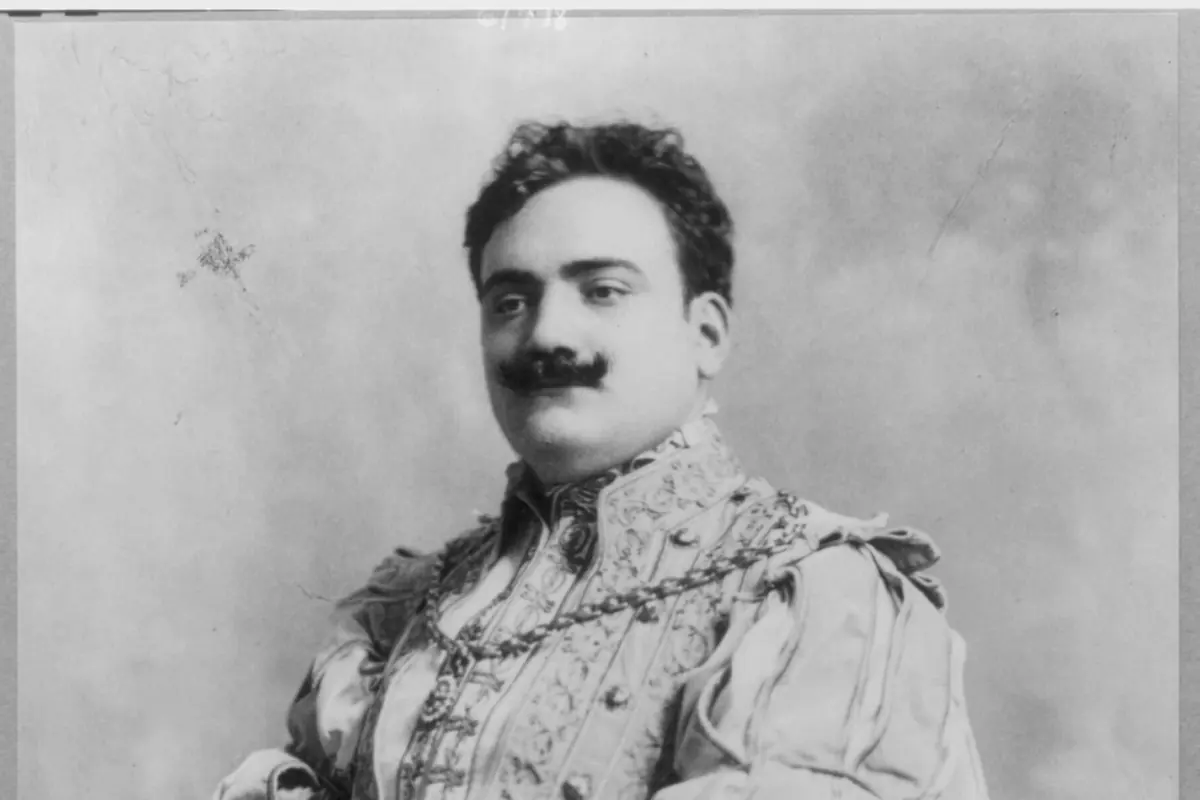
Enrico Caruso was born in Naples on 25 February 1873 and died there on 2 August 1921, at the age of 48. He was baptised the day after his birth in the church next to his family's home on via Santi Giovanni e Paolo. He is generally recognised as the pre-eminent tenor of the 20th century and as the first international recording star, with about 250 commercial recordings made between 1902 and 1920. His career took him to the Metropolitan Opera in New York, where he made 863 appearances, but he remained a Neapolitan who sang the songs of his native city as encores.
The voice on record
Caruso and the gramophone promoted each other. His 12-inch discs were limited to about four and a half minutes, so the arias he recorded were chosen or cut to fit. His 1902, 1904 and 1907 recordings of Vesti la giubba were among the top-selling records of the 78 rpm era. A tenor in a Sorrento concert hall is working in a tradition that Caruso did much to shape: a single voice, a short famous piece and an audience that knows the tune.
The last summer
After a serious illness in New York, Caruso sailed to Italy in late May 1921 to recover. According to his wife Dorothy, in Naples and Sorrento he seemed to be mending and put on weight. In July friends urged him into tiring excursions in hot weather, and the fever returned. On 31 July his party left Sorrento for a clinic in Rome, but by the time they reached Naples he was gravely ill. He died at the Hotel Vesuvio in Naples two days later. The King of Italy, Victor Emmanuel III, opened the Royal Basilica of San Francesco di Paola for his funeral, which thousands attended.
A hotel above the sea
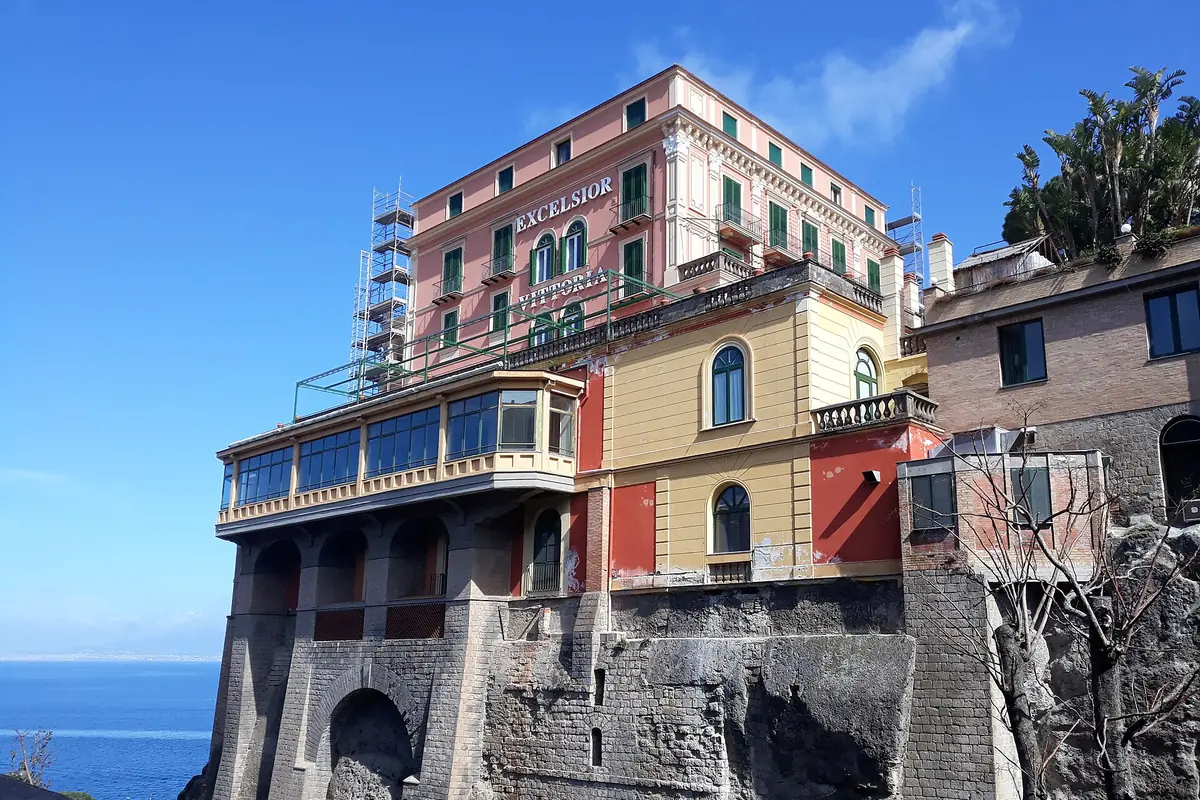
The Excelsior Vittoria hotel stands on the cliff above the water in Sorrento. According to the account of the song Caruso, the singer-songwriter Lucio Dalla stayed there, coincidentally in the very room where Caruso had spent some time shortly before he died. The owners told him about the tenor's last days, and about his passion for one of his young female students, and the story gave Dalla the idea for the song.
The song
Caruso was written by Lucio Dalla in the 1980s and dedicated to the tenor. It tells of a man about to die who looks into the eyes of a girl who was dear to him, and its lyrics contain subtle references to people and places from Caruso's life. Sorrento appears as Surriento, its Neapolitan name, recalling Caruso's frequent visits to the seaside town. The refrain is based on Dicitencello vuje, a Neapolitan song published in 1930. Dalla's own video for the song was filmed in the Caruso Suite of the Excelsior Vittoria hotel.
After Dalla
Other singers took the song up. Luciano Pavarotti covered it in 1989 on his album Tutto Pavarotti, and Florent Pagny's 1996 version reached number two in France. After Dalla's death the song entered the Italian singles chart and peaked at number two. A song written in a Sorrento hotel room for a Neapolitan tenor has become a standard for tenors in general, which is why it turns up in a programme that begins with opera.
Where it fits in the concert
Caruso is among the songs named for the second half of the Sorrento concert, next to 'O sole mio, Torna a Surriento and Funiculì funiculà. The programme can change, so it is a likely piece and not a promise. If you hear it, you will be a short way from the cliff and the hotel that inspired it, which is the kind of local detail a Sorrento concert can offer and a stadium concert cannot. Listen for the Neapolitan words in the refrain, which sit inside standard Italian.
Sources